

With the deaths of two college students, many Americans are hearing about the substance, kratom, for the first time.
Kratom is a stimulant at low doses. At higher doses, it can act like opioids. Opioids are drugs that attach to opioid receptors in the brain and body, the system used for pain and reward.
Weeks prior to the student deaths, the federal government was already moving to restrict some forms of kratom.
This post will review what we know about the deaths, and go over the basics of kratom and its regulation.
Read on for details.
Here’s a summary of what we know so far about the student deaths:
Court affidavits name the students as Aidan Hamilton, 18, and Robert Strang, 20. Both found dead Sept. 21.
Similar packaged products labeled “Smax, Pseudo-DHM,” described as kratom-like or synthetic kratom tablets, were found with each of them.
Investigators say Hamilton’s bank records show purchases at Puffs Vape, Tobacco and Beer in Oxford on Sept. 9, 14, and 20 — the day before he died.
A clerk there allegedly told a confidential informant “people were dying” from the pills.
Two employees from the Oxford store, Yemeni immigrants Yahya Mohamed Mosleh, 51, and Islam Mohamed, 18, were already arrested last week on Schedule I possession-with-intent charges after a raid that seized hundreds of units. However, officials have not formally tied those arrests to the two deaths and Mississippi’s public safety commissioner has said those arrests are not believed to be linked to the two students.
The investigation now includes Express Mart #7 in neighboring Yalobusha County.
Authorities are investigating the deaths of two University of Mississippi students who were found on Monday, Sept. 21. Packaged kratom purchased from at least one retail store reportedly turned up in both instances. Officials haven’t confirmed that the deaths are connected, or that kratom caused them, but logical speculation centers on those themes.
The university has identified the students as Aidan Hamilton, 18, a freshman from Englewood, Colorado; and Robert Strang, 20, a junior from Atlanta. Hamilton was found in Stewart Hall, an on-campus dorm. Strang was found at an off-campus home in Oxford.
An emergency call the afternoon of Sept. 21 described a possible overdose and CPR in progress at the dorm. The deaths came after a football weekend in Oxford, when Ole Miss beat LSU. University officials said they aren’t aware of any additional student deaths.
Mississippi Gov. Tate Reeves says state agencies are helping local investigators and working to speed up toxicology results.
Two Yemeni immigrants have been arrested in an Oxford store kratom bust. However, officials have not publicly tied that case to the two deaths and one public official has said he doesn’t believe it’s related.
What is kratom? And is it regulated?
So what is this substance?
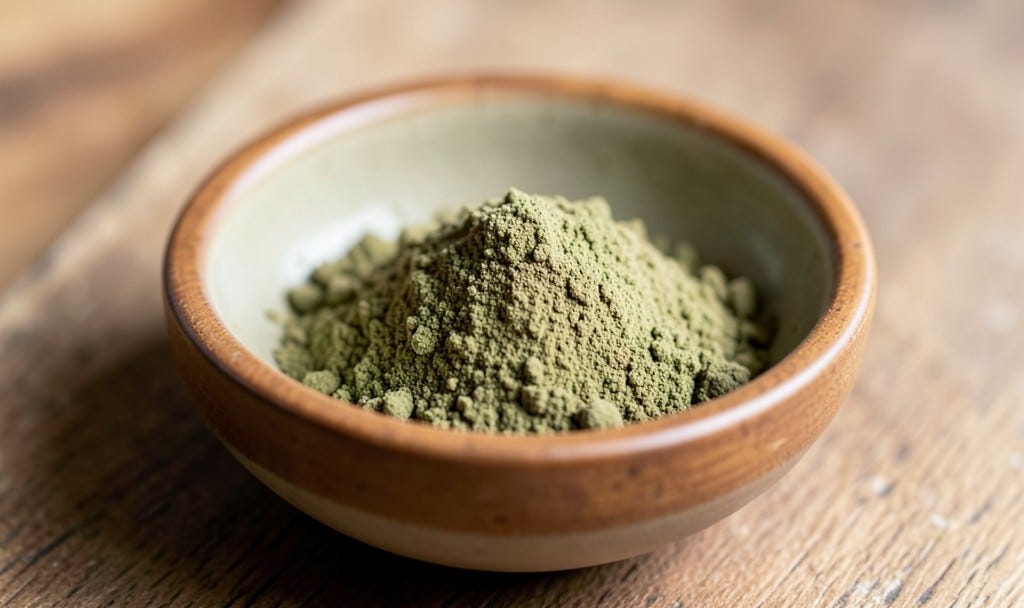
Kratom is sold in the U.S. as powder, capsules, extracts, shots, and gummies. It’s often found in vape and smoke shops, convenience stores, gas stations, and online.
There are both natural and synthetic versions. At higher doses, they act like opioid drugs.
Kratom comes from the leaves of Mitragyna speciosa, a tropical tree in the coffee family that grows in Thailand, Malaysia, Indonesia, and neighboring parts of Southeast Asia.
For generations, workers in those countries chewed kratom for pleasure or brewed the leaves as tea for energy during hard labor and to alleviate pain. At lower doses, it can act like a stimulant. The higher doses cause opioid-like effects because of alkaloids such as mitragynine and 7-hydroxymitragynine (7-OH).
The FDA has warned that kratom is not approved to treat any medical condition. It has been linked to serious adverse events, including seizures, liver problems, dependence, and deaths. It’s frequently mixed with other drugs.
America’s Poison Centers reported mention of 1,489 kratom-related cases in 2023, including five deaths.
However, natural kratom leaf is not restricted under controlled substances in the U.S.
We’ll discuss more about the differences between natural and synthetic in a moment, but suffice it to say that concentrated/synthetic 7-OH and related compounds are in a separate category. The Drug Enforcement Administration (DEA) and HHS have been moving to control those separately.
Kratom laws
State laws are a patchwork and can be very confusing. There are roughly four layers:
Natural leaf or traditional kratom is legal in most states, but it’s banned outright in about 10–11, and regulated in others. State bans include in Alabama, Arkansas, Connecticut, Indiana, Kansas, Louisiana, Massachusetts, North Dakota, Tennessee, Vermont, and Wisconsin.
Some cities and counties ban kratom even when the state does not. That’s the Oxford situation: Lafayette County and the City of Oxford already banned kratom, while much of Mississippi still allows it for adults.
Concentrated 7-OH and synthetics (7-OH tablets, pseudoindoxyl, MGM-15 or “Pseudo-DHM,” etc.) are often treated separately. Some states ban only those. Ohio, for example, has moved against synthetic compounds while leaving natural leaf in a different category.
Federally, the DEA and HHS targeting has been aimed at high-7-OH and synthetic derivatives, not the leaf.
The Ole Miss packages, if they are Pseudo-DHM and synthetic, may fall under the local Oxford ban.
What are “7-OH” and “MGM-15”?
The main compound in “natural” leaf kratom is mitragynine and has only traces of the far more potent 7-OH. 7-OH is short for 7-hydroxymitragynine. So both are in natural leaf but mitragynine is dominant. It’s an alkaloid that acts as a mild stimulant at lower amounts and more like a painkiller/sedative at higher amounts. It’s not as strong as concentrated 7-OH or synthetic MGM-15 - Pseudo-DHM.
In many gas-station products, “7-OH” means an artificially concentrated or chemically made version — pills, shots, gummies — with far more 7-OH than the “natural” plant has. That’s why regulators treat those products as closer to a potent opioid than to tea-like leaf powder.
MGM-15 a semi-synthetic cousin of 7-OH. The chemical name for MGM-15 is dihydro-7-hydroxymitragynine. “DHM” or “Pseudo-DHM” are the shorthand or street names that often show up on smoke-shop labels. “Pseudo” flags that it is in the pseudoindoxyl or chemically altered family, not the natural leaf. Pseudo-DHM tablets are the designer-opioid end of the market.
HHS says compounds like MGM-15 do not occur in the natural plant. DEA has moved to restrict MGM-15 as a “Schedule I” substance. We’ll have more on that in a moment.
The concentrated 7-OH or Pseudo-DHM or MGM-15 products are built to hit the body’s opioid receptors much harder than leaf. But, as I mentioned, leaf still has opioid-like effects, and can cause dependence, nausea, and seizures. In some cases it’s been listed as a cause in deaths.
How kratom arrived in the U.S.
Traditional use of kratom in Southeast Asia dates back at least to the 19th century. Western interest grew in the late 1990s and early 2000s through online botanical vendors and internet forums.
Use of kratom vastly expanded in the 2010s. Some people turned to it for pain, mood, or to ease opioid withdrawal.
By 2021, a federal survey estimated that 1.7 million Americans age 12 and older had used kratom that year.
Kratom as a moving legal target
The FDA still treats kratom as an unapproved new dietary ingredient and an unsafe food additive. That means companies cannot legally market it as a medicine, supplement, or food ingredient, even where state law allows sales. But it also doesn’t automatically make kratom illegal.
Natural kratom leaf is not currently listed or controlled under the federal Controlled Substances Act. The DEA tried to place its main alkaloids, mitragynine and 7-hydroxymitragynine (7-OH), under the strictest federal control in 2016, “Schedule 1,” with “a high potential for abuse, no currently accepted medical uses and a lack of accepted safety for use under medical supervision.” Heroin, LSD, and MDMA are examples. But the government withdrew the plan after public and congressional pushback.
However, in July, the DEA temporarily banned the lab-made cousins of kratom — including MGM-15, the kind of compound tied to “Pseudo-DHM” pills — under the strictest “Schedule I” federal drug controls.
A separate plan to tightly restrict high-dose 7-OH products has been announced but isn't yet locked in.
Natural kratom vs. synthetic
To summarize: natural kratom leaf contains only trace amounts of 7-OH or 7-hydroxymitragynine.
“Manufactured” or synthetic gas-station products are often something else sold under the kratom name: concentrated or semi-synthetic 7-OH, mitragynine pseudoindoxyl, or compounds like MGM-15 or “Pseudo-DHM.” Those are chemically processed, far more potent at opioid receptors, and do not match the leaf’s alkaloid mix.
The FDA and DEA have been targeting those concentrated, synthetic products, not the raw leaf.
In the Ole Miss affidavits, the packages found with the students are described as “Smax, Pseudo-DHM” tablets.
The American Kratom Association says these are not natural kratom. Then again, remember that even natural kratom leaf is not always harmless, and it has been banned in Oxford/Lafayette County.
Investigators are still waiting for toxicology test results for the two students.
Thank you for this Sheryl! As a medical provider who takes care of thousands of patients in my community I can attest to the problems we are seeing with synthetic Kratom. In my area we have a real problem as it is being sold in gas stations, vape shops and the like. We have many young people using these synthetic versions for the opiate like effects and it causes hallucinations, addiction, personality and mood changes and terrible withdrawal for these youth. Natural kratom is not what these places are selling and I hope more states will move to ban these substances. I remember a few years ago when bath salts were the rage and it ravaged our community causing so much suffering until the state finally shut down the shops selling it.
I've been drinking a cup of kratom tea every morning for the past 10 years (I'm 60 yrs old.) I learned about it from opiate addicts when I lived as staff in a halfway house.(I'm an alcoholic).
What I've learned since. For opiate addicts, it's a terrible drug because it just gives a very mild version of what they really want and leads to relapse (or using ridiculous amounts such as whole bottles of capsules at once, such that the waxy coating of the capsules makes them sick).
But for alcoholics it's a miracle drug. Just one cup of tea in the morning has negligible immediate effect, but for the rest of the day it gives protection against the craving effect (what kicks in for an alcoholic who begins drinking, the desire to keep drinking.)
Meaning that if I drink one or two beers in the evening, I get the calming effect, and perhaps have couple more in a social.
context. But then rather than keep going, I get hungry or tired and stop. I often end up pouring out half-cans of beer (which for most of my life was unthinkable).
I spent years yo-yoing between abstinence and ending up in medical detox centers. Since using kratom, my life has been manageable. I swear by it.
It turns alcoholic drinking into non-alcoholic drinking. Abstinence never worked, but kratom has.
I don't know what role it played in the deaths of the two men (although I would strongly suspect it wasn't the kratom).